It’s not just you – it is objectively harder to start and run a company in Malta if you’re a local or a resident. For evidence, one only needs to point to our famous corporate tax rebates, offering an effective tax rate of 5-10%, and even 0% in certain circumstances for foreign shareholders when a local company pays dividends.
Comparing these rates to the flat 35% that a Maltese company pays from the very first euro it declares as profit, then there’s no question that foreign entities enjoy distinct advantages when it comes to doing business in Malta.
Results show that the incentives are working. A 2026 EU Commission report stated that in 2024, a whopping 96% of Foreign Direct Investment (FDI) in Malta was going into Special-Purpose Entities, corporate structures designed to optimize tax rather than contirbute to the actual economy. When this inflow has now reached around 131.5% of Malta's GDP, even capturing a miniscule percentage of that cashflow has huge implications for our tiny country.
What might be less obvious, however, is where this approach started out. At some point, did someone make the explicit call to focus on creating an extra-hospitable environment for foreign direct investment in Malta?
The Origins of the FDI Approach
To answer that question, we need to head back to the 1950s. At the time, Malta was still under British rule and the country’s leader, Dom Mintoff, was pondering a fully-blown integration with the UK at the time (spoilers: Malta actually became independent).
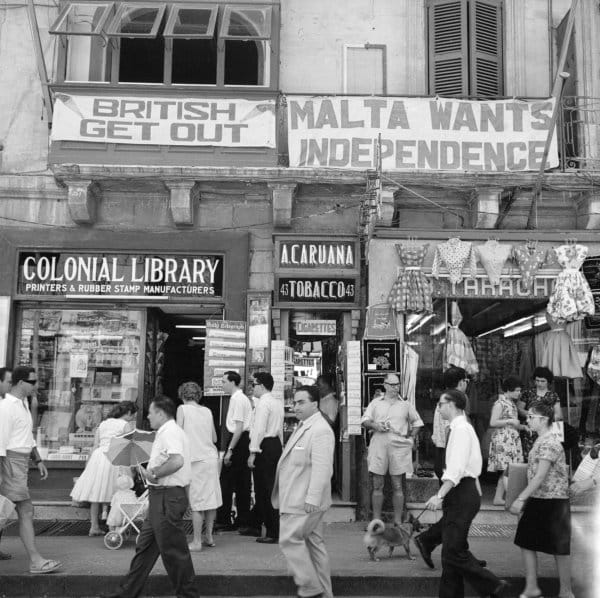
In 1955, several British experts presented a report to Mintoff that highlighted, in typical colonial fashion, the need to attract “overseas firms, especially British ones”, because of course they would say that. Additionally, “the greatest attraction of Malta to overseas firms” was Malta’s cheap labour costs, and to remain competitive, Maltese wages "must (in the best of circumstances) remain below those of the United Kingdom for some time to come."
These recommendations culminated in 1959 with the Aids to Industries Ordinance Act, which created a special Board to process grants, loans, tax-free holidays and customs exemptions specifically for export-oriented, largely foreign-backed manufacturing firms. Starting to sound familiar?
The pattern continued. In 1967, the Malta Development Corporation (MDC) was created specifically to attract foreign large-scale and capital-intensive projects to the island. Malta Enterprise, the entity that’s now responsible for offering incentives to grow and attract business in Malta, is a direct descendent of the MDC, having been restructured in 2004 to also include the "Institute for the Promotion of Small Enterprise", a body specifically promoting and incentivising SME development at the time.
In 2008, Godfrey Baldacchino, one of Malta’s foremost sociologists, wrote that the strategy enshrined:
“...the benign neglect of the potential of small, local firms to create employment, leading successive... governments to concentrate instead on attracting large, foreign companies to Malta."
Huh.
The Colonial Mentality
Quick recap: foreign experts, part of the empire ruling Malta at the time, pushed the idea that the country’s worth to its masters was that of being cheap. Nothing new from a colonial point of view – take over a country and squeeze till it’s dry. Malta, being what it is, and lacking in natural resources, had to compensate in human capital instead of giving up its gold or oil.
However, history buffs will note that the MDC was formed a full three years after Malta became independent in 1964. So clearly, this colonial mindset was carried forward into the “uncharted territory” of a newly minted country making its way in the world. Over time, Malta became increasingly unsympathetic towards the presence of any foreign powers on its shores. It even went as far as declaring a national holiday when the last British servicemen left Malta on the 31st March 1979.
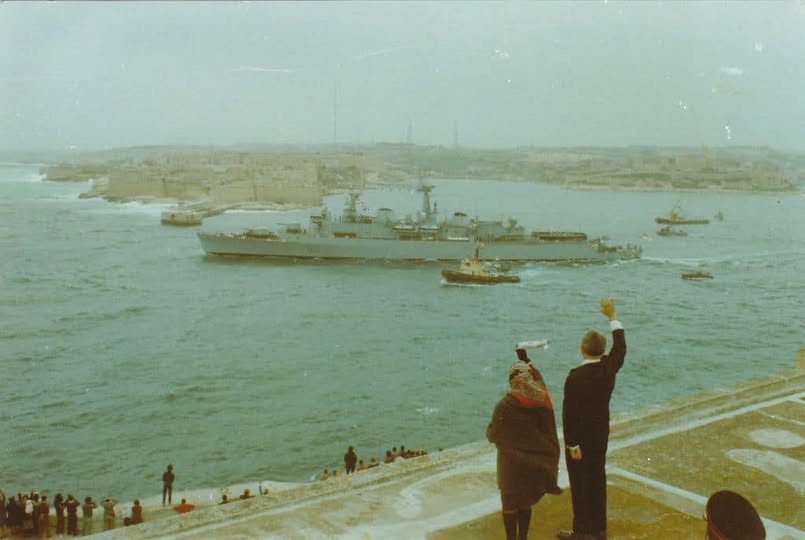
But it feels strange that this vestige of colonial economic policy was never addressed or even changed, despite the rebellious sentiment of the time. The gap was mentioned at one point, but there was never any serious follow-up or implementation done to address the issue, and attracting FDI remained a core strategy for Malta in the following years. Maybe in our collective subconscious, we were scared that our own local economic activity was not enough to keep the country afloat, which was certainly a point the pro-UK Integration camp had made. We'll never know for sure.
The Modern Powers
Fast-forward to the early 2000s, when Malta underwent an infrastructural transformation to bolster its internet connectivity. It aggressively pursued the introduction of broadband internet to most of its citizens, and regularly topped the charts of the EU's access to broadband metrics.

Given that we were now in the age of the World Wide Web, it might have made sense to start looking inwards, since now, value creation did not necessarily depend on having hundreds of cheap, local workers in factories. In theory, locally-grown companies could now potentially “export” their digital products and services at scale, but pay tax at home, at full rates compared to their foreign counterparts.
But lo and behold, that’s also roughly the time when remote gaming (read: online gambling) started ramping up, and while the infrastructure was independently built to comply with EU accession requirements before joining in 2004, it's often claimed that about 50% of Malta’s international bandwidth usage comes purely from iGaming companies. Additionally, around 94% of GVA from the betting sector is by foreign owners. Nothing wrong with that in itself, as iGaming contributes roughly 12% to Malta's GDP, but it's yet another case of our resources creating disproportionate value for companies abroad rather than directed inwards.
The SME/Startup Funding Situation
Nowadays, the general sentiment among Small-to-Medium Enterprises (SMEs) is that easy-to-get support is still lacking. A recent EU commission report noted that:
“Access to external financing for businesses remains limited in Malta, particularly for small innovative businesses... External funding is often more costly and less accessible for smaller businesses, which can constrain their investment capacity and growth potential... particularly the case for small businesses, which often have limited collateral and face difficulties accessing credit in a financial system that is predominantly bank-based.”
As most of you know, we’re also screwed from the private funding perspective. From the same report: "Between 2022 and 2024, venture capital investments averaged around 0.005% of GDP while private equity investments averaged 0.008%." We could write a whole article about why this point is what it is, but for now, suffice to say it isn't an option.
Speaking of innovative businesses, when it comes to pure R&D, the results are just as abysmal. Malta scored dead last in the most recent European Innovation Scoreboard for direct and indirect government support of business R&D (1.2% of EU average) and on venture capital expenditures (4.1% of EU average). Roughly 83 times less than average. Let that sink in.
So yes, opening a business in Malta, especially a startup, is basically the “hardcore mode” of entrepreneurship. The irony is that the absolute majority of businesses in Malta are, of course, SMEs. If anything, they should be receiving the majority of the support, not the crumbs that fall off the table.
This isn't to say that anyone is doing this on purpose. But the biases are there, intended or not, and they can be felt: through the reams of applications you need to fill in to get funding; the endless "eligibility criteria" that is there to supposedly curb abuse, but is actually throwing the baby out with the bathwater; the co-financing requirements that SMEs simply don't have; the months it takes for an application to be fully vetted, and in the meantime your business is struggling to get off the ground or to stay alive. These are all friction points that take copious amounts of time away from the founder actually running the business, cause undue stress, and create an environment of extreme uncertainty for a prolonged period of time.
It is my feeling that the Maltese success stories that everyone now liberally quotes as proof of Malta's ability to homebrew startups, succeeded in spite of the ecosystem rather than because of it: they either needed to leave the island to find success or it was a hundred times harder than it needed to be, because they had virtually zero support. Imagine how many more success stories we could have with the right setup.
The Way Forward
After all this, at no point do I want to imply that FDI is a bad thing. Nor do I mean that foreign founders should not be welcome here.
The injection of foreign capital, when done in the right way, can boost our ecosystem beyond its organic capabilities, and even within our little community, some of the most impactful contributions have come from our expat members - so there’s a very clear, undisputable value add to the local ecosystem by having them here.
However, it’s clear that we’ve put most of our eggs into a few baskets, and they’re not even our baskets – we’re just keeping them warm for someone else. This has to change towards something more equitable.
Given that the initial reason for this strategy was a colonial power exerting dominance over one of its vassals, isn't it about time we changed it? As a country, when will we seriously start believing in ourselves, and put our money where our mouth is?
It also makes sense from an ROI perspective. In principle, companies set up in Malta, by locally based founders who have well-established ties to the island, have a much higher chance of staying once successful.
They are not here for the grants; they are here because their lives are here. Their families are here. And, as the current regime stands, they will pay full price on any profits as opposed to having to give six-sevenths of them back. What’s not to love about that?
Further Reading
Since the article deep-dived into a lot of local history and statistics, here's the actual sources we used:
- Vella, Mario. "That Favourite Dream of the Colonies": Industrialization, Dependence and the Limits of Development Discourse in Malta. https://www.um.edu.mt/library/oar/bitstream/123456789/113218/1/Maltese_society.pdf
- Baldacchino, Godfrey (2008). "The Internationalization of SMEs in Malta: A critical assessment in the context of five European island regions." https://www.researchgate.net/publication/290274415_The_Internationalization_of_SMEs_in_Malta_A_critical_assessment_in_the_context_of_five_European_island_regions
- "MDC, METCO, IPSE to merge into Malta Enterprise Board," Times of Malta. https://timesofmalta.com/article/mdc-metco-ipse-to-merge-into-malta-enterprise-board.174751
- European Commission, Country Report – Malta 2026 (SWD(2026) 218 final), via Council document. https://data.consilium.europa.eu/doc/document/ST-10135-2026-ADD-1/en/pdf. The source for the 96% SPE figure, 131.5% of GDP, the access-to-finance quote, and the 0.005%/0.008% VC/PE figures.
- European Innovation Scoreboard 2026 — Malta country profile. https://ec.europa.eu/assets/rtd/eis/2026/ec_rtd_eis-country-profile-mt.pdf. The source for the "dead last" 1.2%/4.1% figures.