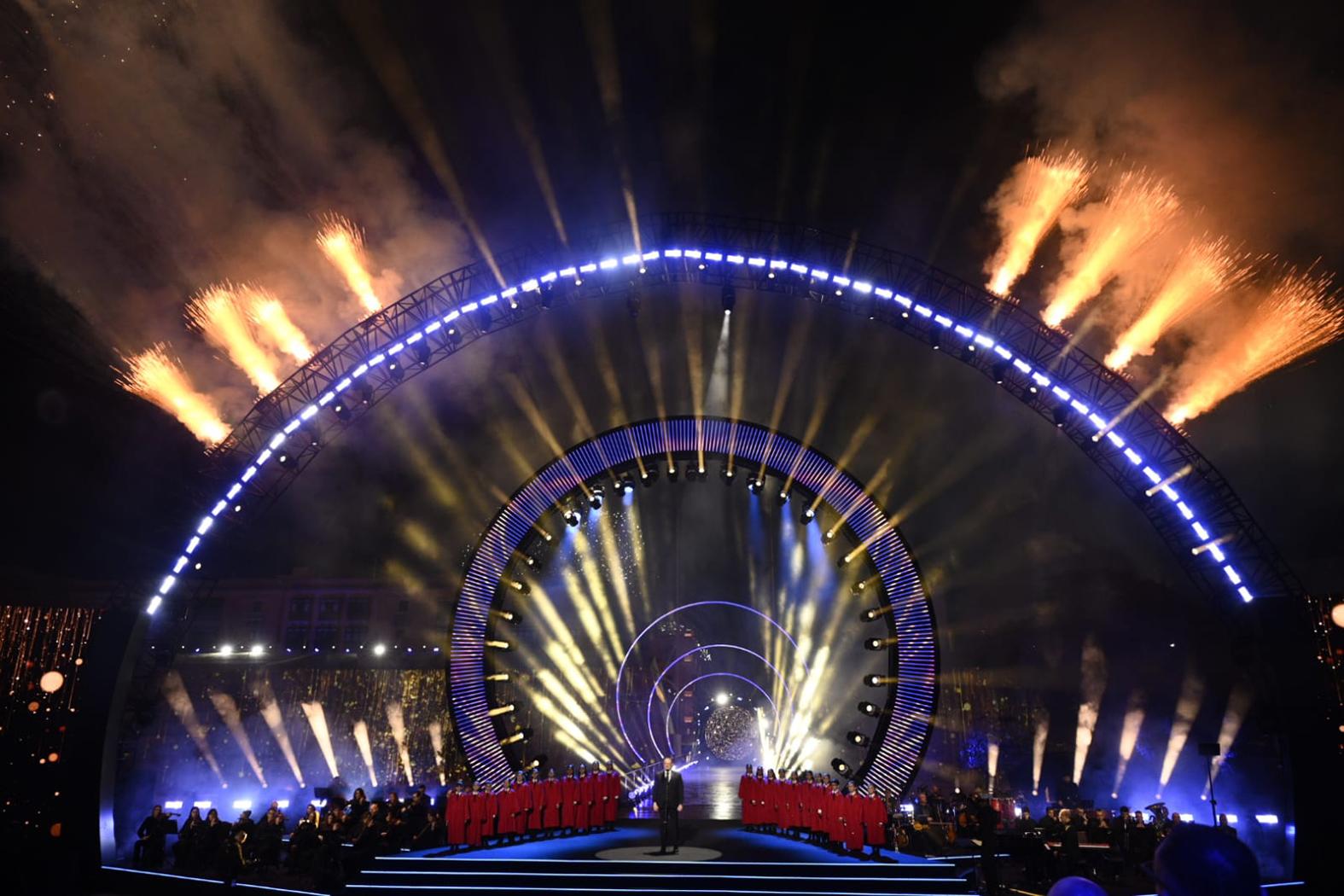
Back in March, the government spent a sizeable part of the €4.5 million budget allocated to Vision 2050 on an event that espoused a "way forward" for the country over the next couple of decades. To even attempt such a thing already showed some promise, seeing as the phrase "make hay while the sun shines" was still a mainstay of contemporary political thinking over the last few legislatures.
So it was encouraging to see that, for a change, we were looking beyond a 5-year window of improvements – five years being the typical term for a Maltese government prior to calling an election – to try and enact lasting change in a country unfortunately defined by short-term-isms.
Combined with Malta's recent push into AI, I was optimistic, even excited, that as a country, we'd finally throw our hat in the ring to really support locally-grown startups and founders as part of a wider strategy – even if it meant kicking the can down the road for another twenty-four years.
Something that got me even more hopeful was that, a couple of years ago, we actually did have a "Malta Startup Framework" in the pipeline, and given the average velocity of government policy, 2026 would have been a very probable time to see it come to fruition. Especially in a vision that would outline where the country was headed over a longer-term timeframe.
I think you guys know where I'm going with this. I actually ran a search, in this 228-page document, to see where startups are mentioned. I got 3 hits. Yikes. So much for my optimism. It's probably easier to talk about what's missing, rather than what's there, but here goes.
What's There
Let's hit the bullet points:
- "Cooperatives should be afforded the same importance, visibility, and policy support as other enterprise forms, including SMEs and start-ups"
- "[Specifically mentioning initiatives for Gozo].... At the same time, targeted initiatives will seek to attract high-value workers, start-ups and entrepreneurs in emerging sectors such as agri-tech and knowledge-based services, anchoring economic diversification in quality, innovation and place-based strengths..."
- "[While discussing Malta's Venture Capital ecosystem]... stronger links between research, start-ups and investors" – more on this later
So, breaking it down, what we basically have is an explicit mention that start-ups are separate from SMEs, that Gozo should serve as a startup hub for new industries like agri-tech and pretty much any software-based startup (what isn't knowledge-based nowadays?), and that we need more VCs to look at startups. Great, makes sense.
What's Not There
While other sections of the document go into painstaking detail for implementation, going so far as to mention KPIs, the current baseline, and a 2035 target, there's no such mention of doing something similar for startups. "Uwejja Simon," you might argue, "Startups naturally form part of each sector, so they don't have to be specifically mentioned!" If that were the case, then within each section there would be specific ideas about how to stimulate startup growth in those areas. No dice, I'm afraid.
It's not really a numbers game, but by comparison, the word "innovation" is mentioned around forty-seven times throughout the document, mostly talking about how much value it would add to the economy and the need for it. But how can we meaningfully discuss innovation without discussing how we're going to foster a productive ecosystem for startups in the distant future?
The Real Problem
Startups are sexy, when they work – they're new, they're exciting, and everyone wants to shake the hand of the next Elon Musk or Sam Altman before the fact. But the problem we have is that, as a country, we don't know, or we can't agree on, what a startup actually is. Beyond the vision document, additional proof of this is that we tend to apply SME-related metrics to startups in areas like funding, such as requesting a five-year cashflow statement, and asking for microscopic levels of detail in their business plans. In actual startups, you can barely predict the next month, let alone the next five years!
By comparison, other countries with established startup ecosystems, like Estonia, Spain, France, etc. have clearly defined terms for what constitutes a startup. It's not the point of the article to go into the specific definitions, but at least, know that they have a conceptual foundation that they can build policy on. We don't have that yet, and we need it badly. The Startup Framework document talked about the need to actually have one, but so far we haven't really seen it.
For too long, we've tried taking the easy way out: let's give grants and incentives for the "bigger" startups to come here, and maybe they will stay. This is a legitimate approach, but so far, it's mostly come at the expense of believing and investing in our local talent, which we have copious amounts of.
What About VCs and Funding?
There are more moving parts to the startup ecosystem beyond the startups themselves, and a cornerstone of that is the funding aspect – or how quickly capital can flow into generating innovative solutions and hopefully revenue in the process. Although the document says that venture capital should become part of a wider "blended" financial structure, this is only done in the context of infrastructural projects as an enabling force, and not as a core part of an ecosystem. Even though they got part of a chapter, there were no KPIs or targets, so clearly, that sector wasn't really treated as a priority. Which to me, sounds like a wasted opportunity – we very gladly let them keep their money here, so why can't we give them concrete ways to spend it?
What About Startup Accelerators and Incubators?
Zilch. Literally nothing written about them. Moving on.
What I'd Like To See
Let's talk about solutions. First things first, we need that Startup Framework ready to go. The reason is that, without a legal definition of what constitutes a startup as opposed to any other kind of entity, we can't define policy around what a startup needs to thrive. It's also a form of disambiguation – should a hair salon be considered a startup? Probably not, unless they invent some new form of hair styling. We need those criteria to be sure.
Secondly, we need a chapter specifically devoted to nurturing the startup and innovation economy. Off-vision for a second, Malta's R&D spending is some of the worst in the EU independent of startups, so it makes a lot of sense to try and shore this up in a long-term plan.
Within this chapter, we need to define, by stakeholder, what incentives and targets we're going to reach, similar to the other priority areas: How many new companies are we going to target? How many need to make it past the third year? How many accelerators should we be hosting? How many registered and accredited investors should we have registered? These are all examples, of course, and the stakeholders would all be defined in the Startup Framework. But it's food for thought.
Thirdly, we need to set the pre-conditions that will allow us to reach those goals. What targets are we going to set in education, in housing, and lifestyle, to help us attract, but most importantly, foster the founders of tomorrow? The last explicit mention of start-ups in the vision document explicitly ties together research, startups and investment, but without elaborating on that point at all. How will these research-to-startup pipelines exist, and be held accountable? Should we give more teeth to Malta Venture Capital, with the hope that it would someday grow into a sovereign fund?
More Questions Than Answers
As an ecosystem, and as a community, these are precisely the questions we should be asking. The world around us is changing at lightning speed, and the purposeful omission of the cutting edge from a twenty-five-year roadmap should be ringing alarm bells.
To add insult to injury, one of the titles in the document is "A Vision of Alignment, Not Disruption". How disappointing. It goes on to say:
"[Discussing disruptive visions vs evolutionary ones]... Malta Vision 2050 firmly belongs to the second category: a vision of alignment rather than disruption. This Vision is not driven by the need to fix a broken system, nor by the ambition to reinvent Malta from scratch."
Status quo. I hate to break it to whoever wrote this, but global disruption will happen whether you like it or not. You can either put the country in a position to capitalise on it, which Malta is traditionally very good at doing, or you can just stick your head in the sand, and be swept up in the ensuing wave, for better or for worse.